
Loading...
Serving Texas City, TX and surrounding areas. (409) 741-9382
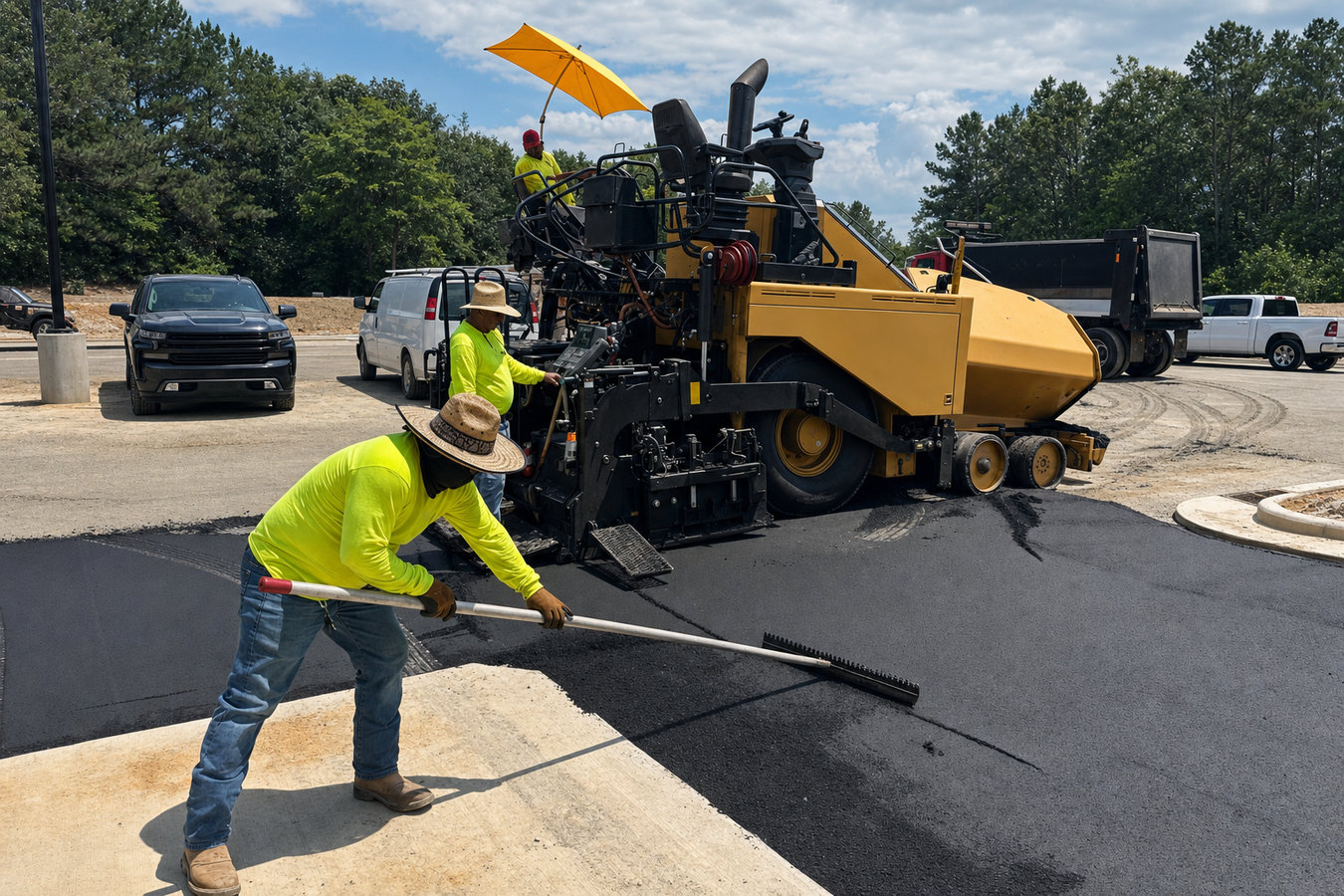
Hallmark Texas City Asphalt Paving serves Pasadena with grading and excavation, driveway paving, pothole repair, and asphalt sealcoating. We work throughout Pasadena's established neighborhoods and know the clay soils, flat drainage patterns, and older housing stock that define pavement work in this part of Harris County.
Hallmark Texas City Asphalt Paving serves Pasadena with grading and excavation, driveway paving, pothole repair, and asphalt sealcoating. We work throughout Pasadena's established neighborhoods and know the clay soils, flat drainage patterns, and older housing stock that define pavement work in this part of Harris County.
Pasadena's flat terrain and slow-draining clay soils make proper grading the most important step in any paving or drainage project here - slope and base depth determine whether the finished surface holds up or fails in the first major rainstorm. Our grading and excavation work in Pasadena accounts for the direction standing water needs to travel off the property, not just a flat base preparation, so the surface above drains correctly from day one.
A large share of Pasadena's homes were built between the 1950s and 1980s, and many driveways from that era have cracked, settled, or heaved from decades of clay soil movement and Gulf Coast heat cycles. Replacing a Pasadena driveway the right way means removing the old slab, correcting the base, and adjusting the slope before the new pour so the surface drains away from the house rather than toward it.
Pasadena receives over 50 inches of rain per year on average, and on flat lots with clay bases, that water finds any crack and saturates the material beneath until the pavement above collapses. We excavate to solid base material, address the drainage condition that allowed the base to saturate, and rebuild the section with material and compaction appropriate for Pasadena's soil conditions so the repair does not just reappear after the next big storm.
Pasadena's summer heat - regularly above 95 degrees from June through September - dries out asphalt binder faster than the product was designed to handle without protection. Sealcoating every two to three years puts a barrier between the surface and that UV and heat exposure, slowing oxidation and keeping the surface flexible through the wet-to-dry cycles that crack brittle pavement. Properties near the industrial corridors along Highway 225 face additional particulate exposure that makes regular sealing even more important.
Pasadena's clay soils generate surface cracks on driveways and parking lots every year as the ground moves through wet and dry seasons, and spring and summer thunderstorms send water directly into those cracks if they are left open. Sealing cracks while they are still narrow costs a fraction of what base repair and resurfacing cost after that water has done its damage over one or two storm seasons.
Pasadena has a significant commercial base serving both residents and the industrial workforce near the Ship Channel and Highway 225. Parking lots in those commercial zones carry heavy daily loads and deteriorate faster than residential surfaces. A planned maintenance schedule - crack sealing, sealcoating, pothole repair, and striping on a regular cycle - costs far less over time than letting surface damage progress to the point where full resurfacing or reconstruction becomes the only option.
Pasadena is the second-largest city in Harris County, with a population well over 150,000 people and a fully built-out urban footprint that stretches from Beltway 8 on the west to the industrial corridors near the Houston Ship Channel on the north. Much of the city's residential development happened between the 1940s and 1980s, which means a large share of Pasadena homeowners live in houses built 40 to 70 years ago - with driveways, sidewalks, and flatwork that reflect that age. Those older concrete surfaces have been through decades of clay soil movement, heavy rain, and Gulf Coast heat, and the cumulative effect is cracking, settling, and heaving that patching alone cannot correct. On properties where the original drainage grade was not generous to begin with, standing water after heavy rain is now a regular problem that compounds the pavement damage every season.
The clay soils under Pasadena are the same expansive coastal plain soils found throughout the Houston metro area, and they never stop moving. Every dry summer shrinks the clay and every wet fall and winter swells it back. Over decades, that movement cracks slabs, shifts fence posts, and causes pavement to heave and settle in patterns that reveal exactly where water drains and where it sits. The tropical storm and hurricane risk that comes with living in the Houston Gulf Coast zone adds another dimension: events like Hurricane Ike in 2008 brought severe flooding to parts of Harris County, and Pasadena properties in low-lying areas near bayous and the flat drainage plain are vulnerable in ways that require contractors to plan drainage and base work for worst-case rainfall, not average conditions.
Our crew works throughout Pasadena regularly, and we understand the local conditions that affect asphalt paving work here. Pasadena is a large city with distinct character from one side to the other - the residential neighborhoods on the south side near Fairmont Parkway and Spencer Highway feel different from the denser areas near Highway 225 and the industrial zones to the north, and both require contractors who know the access routes, the permit process through the City of Pasadena, and the specific drainage and soil conditions that vary across a city this size. We are familiar with the floodplain considerations that apply to residential paving and grading work in the areas near Vince Bayou and Mud Lake that have documented flood histories.
We also regularly serve Alvin to the south and Pearland immediately to the west, which puts Pasadena at the center of our southern Harris County service area. A crew that works across all three cities develops a working familiarity with the regional clay soils, seasonal rainfall patterns, and drainage infrastructure that affects every paving and grading job in this corner of the metro.
Call us at (409) 741-9382 or fill out the contact form. We respond within 1 business day. Mention your Pasadena address and a brief description of the job - driveway, parking lot, drainage, or repair - so we can schedule the right kind of site visit.
We visit the Pasadena property, evaluate the surface, base, and drainage conditions, and give you a written itemized estimate at no charge. We review the scope, the materials, and the total cost with you in person before any work is scheduled - no surprise line items later.
We schedule the job around your availability and a weather window appropriate for the work - paving and sealcoating both require dry conditions to cure correctly. Most residential driveway jobs in Pasadena are completed in one day; larger grading or excavation projects are scoped with a realistic timeline before we start.
At the end of the job we walk the finished work with you, go over any curing or care instructions specific to what was done, and make sure everything was completed to scope. If something comes up after we leave, you have a direct line back to us - no call center, no runaround.
We serve all of Pasadena and the surrounding southeast Harris County area. Call or submit a request and we respond within 1 business day - no obligation, no pressure.
(409) 741-9382Pasadena is a large, fully built-out city in southeastern Harris County, just east of Houston. With a population well over 150,000, it is the second-largest city in Harris County by population, and it has been a core part of the Houston metro area since the postwar suburban expansion of the 1940s and 1950s. The city has a strong working-class and middle-income character, with deep roots in the petrochemical and industrial economy that lines the Houston Ship Channel along its northern edge. Long-standing community traditions like the Pasadena Strawberry Festival and the annual rodeo reflect a city that has a strong sense of its own identity. The residential core is made up primarily of single-family homes on modest lots, most built between the 1950s and 1980s, with brick-veneer or wood-frame construction on concrete slab foundations - the standard for this part of Harris County.
The natural environment around Pasadena is defined by flat coastal plain terrain, heavy clay soils, and several bayous including Vince Bayou and the area around Armand Bayou Nature Center along the city's southern edge - one of the last remaining natural bayous in the greater Houston area. Like all of southeastern Harris County, Pasadena faces real flood risk during heavy rainfall events, and many properties sit in or near FEMA-designated flood zones. Neighboring cities including Pearland to the southwest and Alvin to the south share the same soil conditions and flooding exposure, and we serve all of them.
Keep your lot safe and compliant with crisp, long-lasting line markings.
Learn MoreFull-depth parking lot installations designed for heavy traffic and durability.
Learn MoreLarge-scale commercial paving projects completed on time and on budget.
Learn MoreOngoing maintenance programs that protect your pavement investment year-round.
Learn MoreRestore worn pavement with a fresh overlay without full replacement cost.
Learn MoreQuick pothole patching to eliminate hazards and prevent further deterioration.
Learn MoreProper site grading ensures drainage and a stable foundation for paving.
Learn MoreDurable concrete curbs and sidewalks that define and protect paved areas.
Learn MorePrecision milling removes old surfaces cleanly in preparation for repaving.
Learn MoreTraffic-calming speed bumps installed to improve safety in your lot.
Learn MoreWe serve all of Pasadena and the surrounding area. Get a written, itemized estimate at no charge - call now or request online.