Loading...
Serving Texas City, TX and surrounding areas. (409) 741-9382
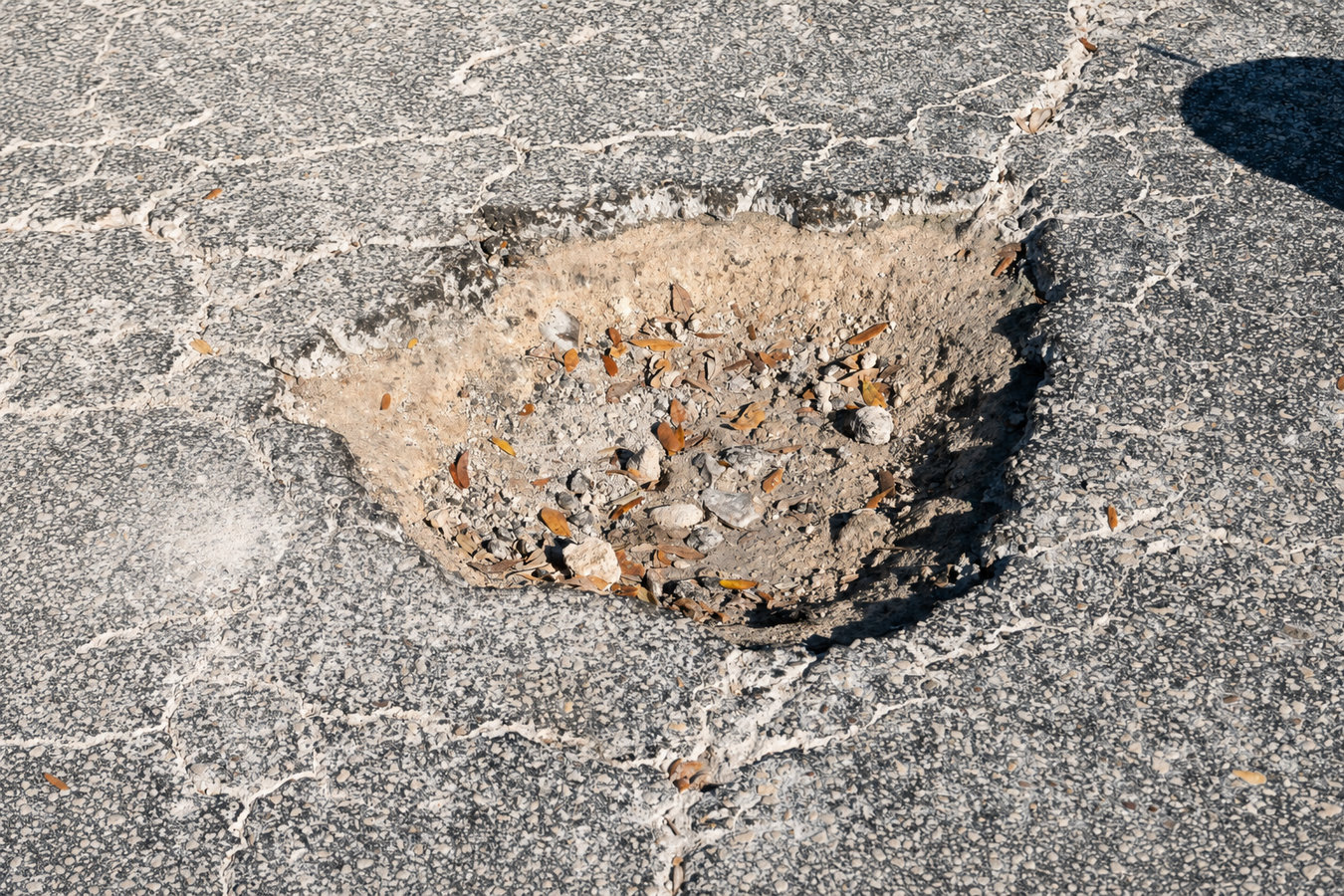
Potholes get bigger with every Gulf Coast rainstorm. We cut clean edges, rebuild the base, and compact hot-mix asphalt flush so the patch lasts.
Pothole repair in Texas City means removing damaged asphalt down to stable ground, cleaning the void, and filling it with compacted hot-mix asphalt - most residential jobs take a few hours and the surface is ready to drive on the same day.
In this area, potholes form faster than most people expect. The flat, low-lying terrain around Galveston Bay lets water sit on and seep into pavement, while the heavy clay soils underneath swell and contract with every wet-dry cycle. That combination breaks through asphalt quickly. If you have a hole today, it will be a larger hole after the next storm.
A surface patch that skips edge prep and base work will fail within months. For situations where the surrounding surface has widespread damage, our full asphalt repair service addresses more extensive deterioration at the same time.
An actual hole where asphalt has broken away leaves a rough, jagged depression. In Texas City, these often appear or worsen after heavy rain events, when water sitting under the surface causes the top layer to collapse under vehicle weight.
A pattern of interconnected cracks that looks like alligator skin means the base beneath is losing its ability to support the surface. Left alone, those cracked sections break apart into potholes - especially after the next heavy rainfall soaks through.
Persistent standing water signals the surface has already begun to degrade in that area. Given how frequently Texas City sees heavy rain, a spot that holds water will deteriorate quickly without repair.
If part of your driveway feels spongy or gives slightly when you walk or drive over it, the base material underneath has been compromised - often by water intrusion. That soft spot is a pothole in the making.
Every pothole repair starts with saw-cut edges around the damaged area - clean, straight cuts that give the new asphalt a solid boundary to bond to. We remove all loose material, check and rebuild the base where needed, then fill with hot-mix asphalt compacted in layers. The finished patch sits flush with the surrounding surface, with tight edges and no gaps. For driveways with a few scattered holes, this targeted approach is the most cost-effective way to restore a drivable surface without unnecessary work.
When damage is more widespread, we assess whether larger sections of base have failed - in Texas City, the expansive clay soils and frequent rain often degrade the base beneath the holes as much as the surface itself. In those cases, a section may need full-depth removal before the patch goes in. For properties where repairs keep coming back season after season, our grading and excavation service addresses the root cause at grade level, and our full asphalt repair service handles larger deteriorated areas. We will tell you honestly which approach your situation calls for.
Suits driveways and parking areas with isolated holes in otherwise sound pavement.
Suits areas where the base beneath the hole has failed and needs rebuilding before the patch goes in.
Suits properties with several potholes spread across a driveway or lot - addressed efficiently in a single visit.
Suits homeowners dealing with new or worsened potholes after a tropical storm or extended flooding event.
Texas City sits on low-lying coastal plain along Galveston Bay, and the flat terrain means water drains slowly after every rain. When water sits on pavement, it seeps into any crack or weak spot, softens the base underneath, and traffic finishes the job - turning a hairline crack into a pothole within a season or two. The expansive clay soils here make things worse, swelling when wet and pulling away when dry, stressing the pavement from below. A hole that looks manageable in the dry months gets bigger with every Gulf Coast downpour.
We work across the area, including Pearland and Dickinson, and the same drainage and clay-soil conditions that affect Texas City follow us through every job in Galveston County. Getting a repair done before the next storm - not after - is what keeps a small problem from doubling in size and cost. A properly compacted hot-mix patch handles the soaking rains this area sees regularly; a cold-pour filler does not.
Describe the number of holes, their approximate size, and where they are on your property. We reply within one business day and schedule a free on-site estimate, because depth and base condition are hard to judge without seeing the driveway.
We walk the damaged area, check the depth of each hole, and evaluate the surrounding pavement and base. We tell you honestly whether targeted patching makes sense or whether the damage is extensive enough to warrant a larger repair - and flag any drainage issues that contributed.
We cut clean edges around each pothole, remove all loose material, rebuild the base where needed, then fill with hot-mix asphalt compacted in layers. The patch is built slightly proud of the surface and compacted down flush. Most residential jobs are complete in a few hours.
We do a final check on each patch - flush, tight edges, no gaps - and walk you through what was done. You can typically drive on the repaired area within a few hours of completion.
Texas City's rainy season does not wait. Every storm that soaks into an open hole makes the repair bigger and more expensive. Call or submit the form and we will get back to you within one business day.
(409) 741-9382We cut clean, straight edges around every hole before any asphalt goes in. This step takes more time than shoveling cold-pour filler directly into the void, but it is what keeps the patch bonded to the surrounding pavement through wet and dry cycles instead of pulling away at the edges within a season.
Texas City's clay soils frequently degrade the base beneath a pothole as much as the surface itself. We check the base at every hole and rebuild it where needed before filling. A patch laid over a failed base will fail again - we find out what is actually wrong before we fill it.
Texas requires asphalt contractors to hold a state-issued license verifiable through the Texas Department of Licensing and Regulation. We carry liability insurance and provide a written estimate before any work begins, so you have a clear record of what was agreed to.
We have worked on driveways and parking areas across Galveston County and know exactly how flat terrain, clay soils, and coastal storm frequency affect pavement. When a pothole keeps coming back in the same spot, we look at whether drainage is the real issue - and tell you what it will take to fix it for good.
Getting a pothole repaired properly the first time costs less than redoing a failed patch after the next storm. We give you a written scope, do the prep work the right way, and stand behind the result.
When recurring potholes point to a drainage or base-grade problem, proper excavation and regrading address the root cause rather than the symptom.
Learn MoreFor driveways or lots where damage goes beyond isolated holes, full asphalt repair tackles widespread cracking and surface deterioration in one visit.
Learn MoreEvery Gulf Coast rain pushes more water into an open pothole and grows the repair bill. Call us today or submit a request and we will get back to you within one business day.