Loading...
Serving Texas City, TX and surrounding areas. (409) 741-9382
Cracks and potholes get worse fast in Gulf Coast heat and rain. We find the cause, fix it at the base, and leave you with a patch that actually holds - not just looks good for a season.
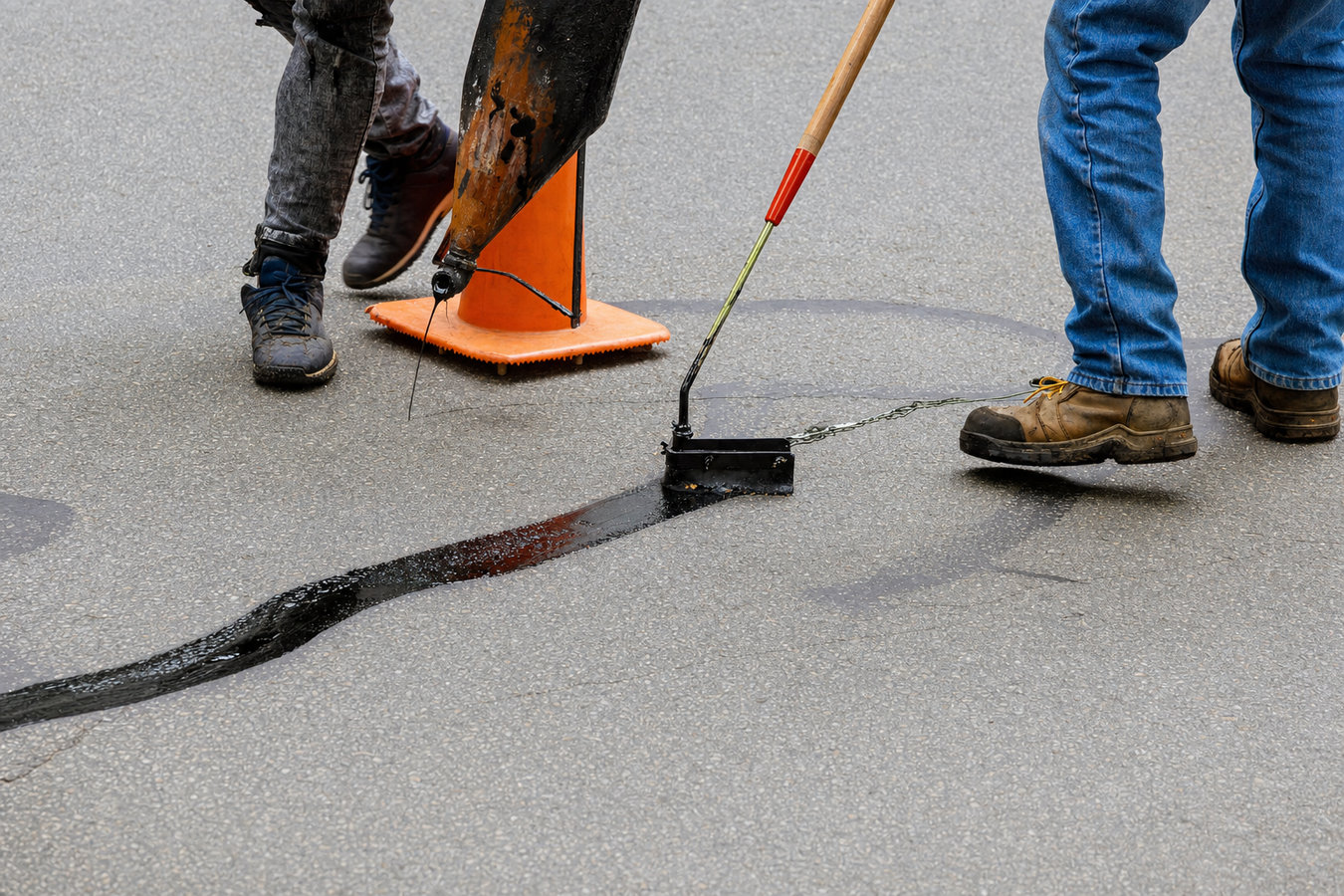
Asphalt repair in Texas City means removing or patching the damaged sections of a paved surface and replacing them with fresh hot-mix material that bonds to the surrounding pavement - most residential jobs are completed in a single day, with the repaired area ready for light traffic within 24 to 48 hours.
A repair is only as good as what the contractor does below the surface. Before any new asphalt goes down, we assess whether the base underneath is still solid. If it is, targeted patching can add years of life at a fraction of what a full replacement costs. If the base has failed, covering it up is a waste of money - the crack will return within a season. Once any repair is cured, pairing it with asphalt crack sealing across the wider surface is the most cost-effective way to keep the same damage from spreading to adjacent areas.
We work in Texas City and the surrounding area every week and understand how Gulf Coast conditions - heavy rain, clay soil, and prolonged heat - drive the specific types of damage that show up on driveways here.
If cracks running across your driveway seem wider or longer than they were a season ago, the pavement is telling you it needs attention. In Texas City's heat and humidity, open cracks let water reach the base - and once the base softens, the repair becomes far more involved and expensive.
A pothole or a low spot that collects water after rain is a sign the base material has shifted or washed out. Texas City's flat terrain and heavy rainfall make this a common problem - water has nowhere to drain quickly, so it pools and works its way down through any opening it can find.
Interconnected cracks that look like alligator skin mean the pavement has likely failed at the base level, not just the surface. This pattern is common in areas with expansive clay soils like those found throughout the Texas City area. Surface patching alone will not fix it.
Asphalt that has turned gray and feels rough or crumbly at the edges has lost the oils that hold it together - largely from UV exposure. Edges without the support of surrounding pavement deteriorate first. Once they are crumbling or breaking away, the surface becomes vulnerable to faster deterioration from the sides inward.
We offer targeted repair for residential driveways, commercial parking areas, and private roads. Every repair starts with an honest assessment of what is happening below the surface - not just what you can see on top. For damage limited to the surface, we cut out the affected area, clean the edges, apply a bonding layer, and compact fresh hot-mix asphalt into the repair zone. For areas where the base has softened or washed out, we excavate down to solid ground, rebuild the base layer, and then pave on top. Smaller isolated damage can often be addressed with asphalt crack sealing as a preventive step before it grows into a full patch job.
When a surface has widespread damage across multiple areas and repair would cost nearly as much as starting fresh, we will tell you that honestly. Our pothole repair service handles the specific deep-void damage that develops when base material washes out under repeated flooding - a common pattern on Texas City properties after a heavy storm season.
For isolated cracks, damaged sections, and deteriorated spots where the base is still solid. We cut clean edges and compact new asphalt flush with the surrounding surface.
When the base has failed under a section, we excavate down, rebuild the foundation layer, and pave on top. The right fix for sunken areas and alligator-cracked sections.
Driveway edges break down faster than the center. We repair and reinforce crumbling edges to stop further deterioration from working inward across the surface.
Once repairs are fully cured, applying a seal coat over the entire surface evens out the appearance and protects both old and new asphalt from the Gulf Coast sun and rain.
Texas City does not experience the freeze-thaw cycles that crack pavement in northern states. The cracking and sinking you see here is driven by a different combination of forces - prolonged UV exposure that dries out the surface binder, heavy Gulf Coast rainfall that pushes water under the pavement, and expansive clay soils that move constantly with the wet-dry cycle of each season. A repair approach designed for Minnesota or even dry West Texas misses the actual problem. The contractor needs to understand how these local conditions interact, or the repair will fail in the same spot within a year.
The flat, low-lying terrain also means drainage is almost always part of the problem. When water cannot drain off a driveway quickly, it finds its way into cracks and works down to the base - and on clay soil, that water causes the ground to swell, pushing the pavement up from below. We factor drainage into every repair assessment, not just the visible surface. We serve customers dealing with the same conditions in Santa Fe and Dickinson where the same Gulf Coast soil and drainage dynamics affect every driveway in the neighborhood.
Describe what you are seeing - cracks, potholes, sunken spots, or general wear. We respond within one business day and schedule a free on-site visit. We do not quote repairs without seeing the damage in person.
We walk the surface, assess the base condition, and check how water drains. Your written estimate covers exactly what work is needed - including whether the base requires attention before new asphalt goes down.
The crew cuts out or mills the damaged sections, cleans the area, and compacts fresh hot-mix asphalt into the repair zone. Most residential jobs are complete in one day, with cleanup done before the crew leaves.
We tell you exactly how long to keep vehicles off the repaired area - typically 24 to 48 hours, longer in summer heat. We also advise on whether a follow-up sealcoat makes sense to protect the full surface once the repair has cured.
Free on-site estimate. Written quote. We check the base - not just the surface - so the repair actually holds.
(409) 741-9382We never just cover visible damage and move on. Every repair starts with an honest look at the base - because a patch placed over a failing foundation will crack in the same spot within a season. Catching base issues early saves you from a far more expensive repair down the road.
In Texas City's flat, low-lying terrain, water reaching the base is often what caused the damage in the first place. We look at how water drains off your surface and flag any grading issues that would cause the same problem to return after the repair is done.
Texas requires asphalt contractors to hold a valid state license, and you can verify ours through the{' '}Texas Department of Licensing and Regulation. Working with a licensed contractor protects you if something goes wrong and confirms the business is operating legally.
The combination of expansive clay soil, heavy rainfall, and prolonged heat creates damage patterns specific to this region. We have worked on driveways across the Galveston Bay area long enough to know what those patterns look like - and what it actually takes to fix them.
Every repair we do is tied to a written estimate that includes what we found underneath and what we did about it. The Texas Asphalt Pavement Association sets standards for repair quality specific to Texas climate conditions, and we follow them on every job. You can also verify contractor licensing at tdlr.texas.gov before any work begins.
Targeted crack sealing to stop water from reaching the base before small cracks turn into larger, more expensive repairs.
Learn MoreDeep-void repair for potholes that have developed from base material washing out after heavy Gulf Coast rainfall.
Learn MoreEvery Gulf Coast rainstorm pushes more water into open cracks - the sooner you fix it, the less it costs. Call now or fill out the form and we will get back to you within one business day.